
Allen Toussaint
The quiet hand behind New Orleans rhythm and blues
From a shotgun house in Gert Town, a piano player became the man behind hundreds of New Orleans records without ever needing the spotlight.

Allen Toussaint was born in New Orleans in 1938, the youngest of three children, and grew up in a shotgun house in the Gert Town neighborhood. His mother, Naomi Neville, welcomed and fed the musicians who came to practice and record with her son, and he later borrowed her name as a pseudonym for some of his work. His father worked on the railway and played trumpet. Toussaint learned piano as a child, took informal lessons from an elderly neighbor, and soaked up the syncopated second-line style of Professor Longhair.
A lucky break arrived at seventeen, when he stood in for Huey “Piano” Smith at a gig with Earl King's band. That introduced him to the circle around Dave Bartholomew, who played regularly at the Dew Drop Inn. In 1957 he made his first recording, playing piano on a Fats Domino record, and the same year he scored his first success as a producer with Lee Allen's “Walking with Mr. Lee”. Before long he was a regular in Bartholomew's band, working with Domino, Smiley Lewis and other leading names of the city.
In 1960 Joe Banashak of Minit Records, later Instant, hired him as an A&R man and producer. Over the next few years Toussaint played, wrote, arranged and produced a string of hits for New Orleans R&B artists such as Ernie K-Doe, Chris Kenner, Irma Thomas, Art and Aaron Neville and Lee Dorsey. “Mother-in-Law” and “I Like It Like That” are among the examples of work from what is regarded as his most creatively successful stretch.
The credits only grew. Dr. John's “Right Place, Wrong Time” and Labelle's “Lady Marmalade” are the best known of the hundreds of recordings he produced, and many musicians recorded his compositions. His own records, such as “What Is Success” from 1970 and “Happiness” from 1978, put the man usually standing behind the glass out in front for a change. He died in November 2015, leaving a catalogue that shaped New Orleans rhythm and blues from the 1950s to the end of the century.
On JFK
Songs by Allen Toussaint in the JFK Radio playlist:
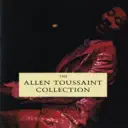 Happiness1978
- What Is Success1970
This story is based on the Wikipedia article “Allen Toussaint” and is shared under the Creative Commons Attribution-ShareAlike 4.0 licence. Read the Wikipedia article.