
France Gall
The 17-year-old who won Eurovision and was told she was out of tune
France Gall took the 1965 Eurovision Song Contest for Luxembourg with a Serge Gainsbourg song that was booed in rehearsal.

France Gall was born Isabelle Geneviève Marie Anne Gall in Paris, in 1947, into a family of musicians. Her father wrote lyrics for Édith Piaf and Charles Aznavour, and her mother sang. She left school after failing a year, and in 1963, encouraged by her father, signed with Philips Records. Her artistic director suggested the stage name France Gall, inspired by a recent rugby match between France and Wales.
Her first single, “Ne sois pas si bête”, was released on her sixteenth birthday and quickly became a success. Then Denis Bourgeois asked Serge Gainsbourg to write for her. His “N’écoute pas les idoles” reached the top of the charts in March 1964, and the partnership continued with “Laisse tomber les filles” the same year. She moved easily between jazz, children’s songs and pop, and made her live debut as the opening act for Sacha Distel in Belgium.
Then came Eurovision. In 1965, at seventeen, she was chosen to represent Luxembourg and picked “Poupée de cire, poupée de son” from ten songs offered to her. At the contest in Naples on 20 March it was reportedly booed in rehearsal for straying so far from the usual style, and critics later called her performance out of tune. She won anyway with 32 points, and the victory boosted her name abroad. She released German, Italian and Japanese versions of the winner.
Her later career was shaped by Michel Berger, with whom she worked and whom she married in 1976. Her best-known singles include “Il jouait du piano debout”, “Évidemment” and “Ella, elle l’a”, along with “Samba Mambo”. Gall died on 7 January 2018, and she is regarded as one of the most acclaimed French pop singers, a girl who was told she was off-key and sang her way into the history books.
On JFK
Songs by France Gall in the JFK Radio playlist:
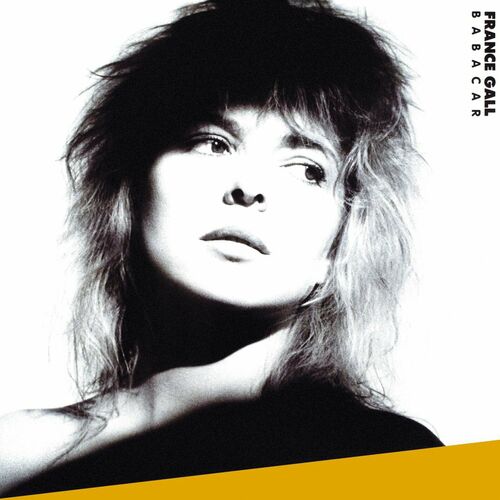 Ella Elle L'a1988
This story is based on the Wikipedia article “France Gall” and is shared under the Creative Commons Attribution-ShareAlike 4.0 licence. Read the Wikipedia article.